
Tips for Storing Fall Crops
During the winter, I typically shift most of my diet towards rice, beans, bread, and cheese. It is quite the stark contrast from summers spent with vegetables filling every nook and cranny of my fridge. In the past I’ve experimented with storing fall crops, but ended up losing valuable produce because I didn’t store it properly. I did a little research so I can spruce up my pantry for the winter.
nn
Storing fall crops saves money, makes it easier to support local farmers, and ensures that you have access to delicious, healthy food late into the winter months. There’s no need to go without local vegetables this winter if you follow these easy tips for storing fall crops.
nn
Crops for Cool Storage (45-60 degrees)
nn
Dry beans
nn
Store in airtight jars in a cool, dark place. Freezing dried beans kills any insects present.
nn
Garlic
nn
Store in boxes or mesh bags in a cool place with moderate humidity, such as a cool basement.
nn
Onion
nn
Store in boxes or mesh bags in a cool place with moderate humidity.
nn
Potato
nn
Store in closed boxes or cloth-covered baskets in a cool place with moderate humidity, or store in buried containers.
nn
Winter squash
nn
Store in bushel baskets, shallow containers or on shelves in a cool place with moderate humidity.
nn
nn
Crops for Cold Storage (32-45 degrees)
nn
Apple
nn
Store in refrigerator or another very cold place, in perforated plastic bags or waxed boxes to maintain high humidity. Check weekly.
nn
Beet
nn
Refrigerate beets in plastic bags or pack in damp sand in a sealed container and store in a cold basement, garage or root cellar.
nn
Cabbage
nn
Refrigerate in plastic bags or plant trimmed cabbage heads with roots attached in buckets of damp sand in a root cellar or cold greenhouse.
nn
Carrot
nn
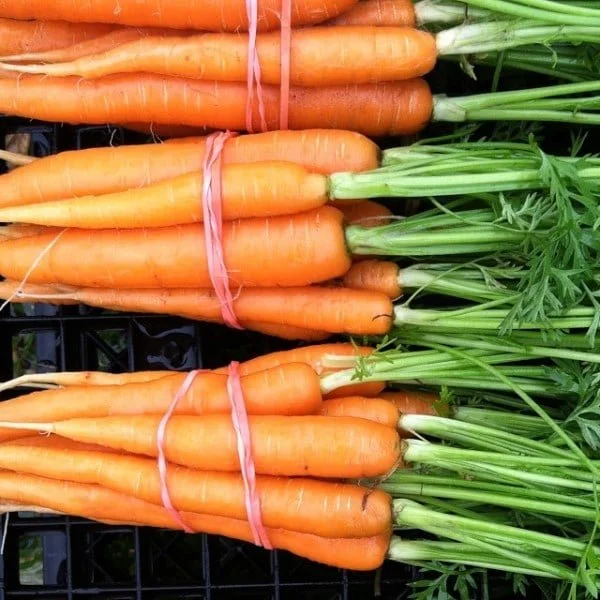
Refrigerate or pack in damp sand in a sealed container and store in a cold basement, garage or root cellar.
nn
Turnip
nn
Refrigerate or pack in damp sand in a sealed container and store in a cold basement, garage or root cellar.
nn
nn
For more information on how to store fall crops, click here.